What is an AI Tutor? A Parent's Guide
Learn how an AI tutor works, where it can help your child, its limits, and what parents should check before choosing one.

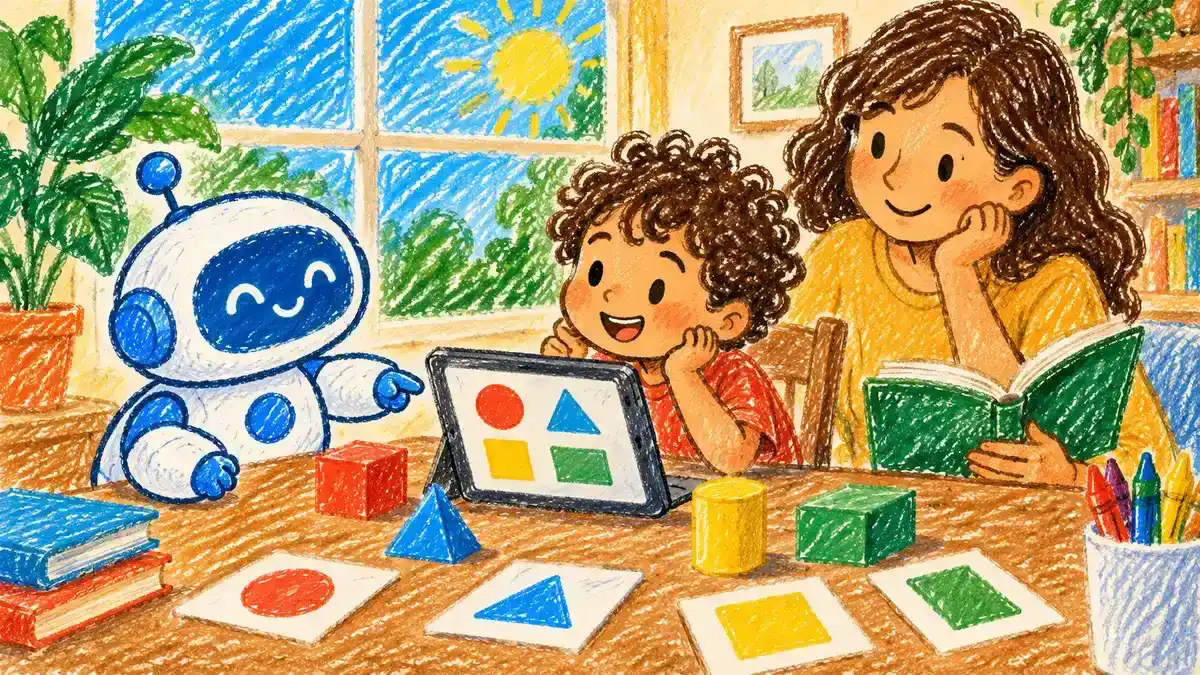
An AI tutor is a learning tool that uses artificial intelligence to respond to a student's answers, explain ideas, and adjust practice as the student works. Unlike a recorded video or a fixed worksheet, it can react in the moment. If a child is stuck, it can offer a smaller step. If the child answers confidently, it can move ahead.
That sounds simple, but not every product labelled “AI tutor” offers the same experience. Some are general chatbots with an education prompt. Others are built around a defined curriculum, age-appropriate activities, and ongoing progress. For a parent, the important question is not whether a tool uses AI. It is whether the tool helps your child think, practise, and become more independent.
How does an AI tutor work?
A well-designed AI tutor usually combines three parts:
- A learning path. The product knows which concepts a student is expected to learn and the order in which those concepts build on one another.
- A student interaction. The child answers a question, speaks, selects an object, draws, or completes another activity.
- A feedback loop. The tutor uses that response to decide what to explain, practise, or review next.
Imagine a child learning addition. A worksheet can mark 7 + 5 right or wrong. An AI tutor can notice that the child counted seven objects correctly but lost track while counting five more. It might show two smaller groups, ask the child to combine them, and then return to the original problem.
The best systems do not simply reveal an answer. They use prompts, examples, and questions to help the learner reach it.
Where an AI tutor can help
Personalised pacing
In a classroom, one teacher has to move a whole group forward. At home, an AI tutor can wait. A child can hear an explanation again, spend longer on a difficult skill, or move quickly through material they already understand.
Immediate feedback
Practice is more useful when a misconception is addressed before it becomes a habit. Immediate feedback helps a child connect an action with its result while the problem is still fresh.
Low-pressure repetition
Children sometimes avoid asking a question because they are worried it is too basic. A patient digital tutor lets them ask again without embarrassment. That can be especially useful when rebuilding confidence.
Flexible practice
An AI tutor is available outside school and does not require coordinating calendars. Short, regular sessions may be easier to fit into family life than an occasional long session.
What an AI tutor should not replace
AI can support learning, but it is not every part of education.
A classroom teacher sees how a child participates in a group, communicates with classmates, handles frustration, and responds across many subjects. A skilled human tutor can read subtle body language and bring personal judgement to a difficult moment. Parents provide encouragement, boundaries, and context no app can reproduce.
Think of an AI tutor as one member of a child's support system. It may provide guided daily practice while a teacher sets broader goals, or help a child prepare questions for a weekly human tutoring session.
Seven questions to ask before choosing one
1. Is it designed for your child's age?
An adult chatbot with a cheerful theme is not automatically child-friendly. Look for age-appropriate language, interaction length, reading level, and visual design.
2. Does it teach or just give answers?
Try a wrong answer on purpose. Does the tutor explain the misconception and guide the learner, or does it immediately display the solution? Productive struggle is part of learning.
3. Is there a clear curriculum?
Personalisation needs direction. The tool should connect activities to a coherent sequence rather than generating an endless stream of unrelated questions.
4. Can the child show their thinking?
Correct answers do not always mean correct understanding. Strong learning experiences ask students to sort, model, explain, compare, or choose a strategy—not only enter a final number.
5. What can parents see?
Useful progress information should answer plain questions: What is my child practising? Where are they improving? Which concept still needs attention?
6. How is children's data handled?
Read the privacy policy. Check what information is collected, why it is needed, how long it is retained, and whether a parent controls the account. Be cautious about tools that invite children to share unnecessary personal details.
7. Does your child want to return?
Engagement is not the same as constant rewards. Watch whether your child talks about the maths, attempts another problem, and recovers after mistakes. Those behaviours matter more than screen time alone.
How to introduce an AI tutor at home
Start with one short session while you sit nearby. Tell your child that the goal is to explore, not to earn a perfect score. If they get stuck, wait long enough for the tutor to respond before stepping in.
Afterward, ask questions that focus on thinking:
- What did you figure out?
- Which part felt tricky?
- Did the explanation help?
- What would you like to practise next?
You do not need to monitor every future session. The first few conversations simply establish that learning includes mistakes, questions, and retries.
AI tutor, human tutor, or both?
Choose based on the learner's need.
- An AI tutor can work well for frequent practice, immediate feedback, and self-paced review.
- A human tutor may be the better choice for complex exam planning, persistent emotional barriers, or needs that require expert professional judgement.
- A blended approach can use an AI tutor between human sessions, leaving valuable tutor time for deeper diagnosis and discussion.
If a child is experiencing ongoing distress, has a suspected learning difference, or is falling significantly behind, talk with their teacher or an appropriate education professional. A learning app should not be used to diagnose a child.
The bottom line
The value of an AI tutor is not that it can talk. It is that it can create a responsive practice loop: notice what a child does, offer the right next step, and give them another chance to think.
At AIforJr, we are building that experience around patient, interactive lessons for young learners. You can try a free addition lesson to see how an AI tutor can guide a child without simply handing over the answer.
Make Your Kids Future Ready Today!
Unlock free access to world-class personalized tutoring powered by AI
Join Beta for 100% FREEKeep Learning!